Cabinetry guide
Cabinet Door Styles, Explained
The door is nearly all of what you see on a finished cabinet, so door style decides the room’s design language more than any other cabinet choice. The good news: almost every door you have seen belongs to one of four families.
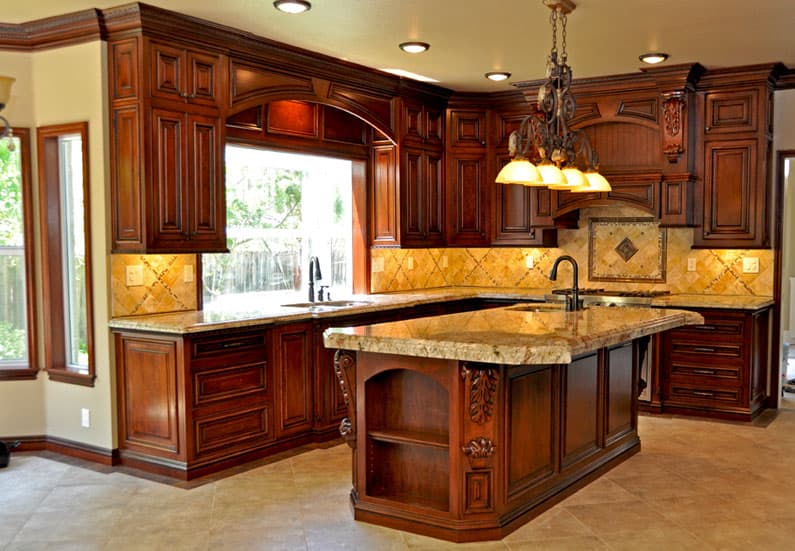
Raised panel — the traditional statement
A raised-panel door frames a center panel that lifts toward the surface, with a profiled edge cut around it. It reads formal and dimensional, catches light along its profiles, and pairs naturally with crown mouldings, corbels, and glazed finishes. Most classic and old-world kitchens are raised-panel work.
Recessed panel / shaker — the versatile middle
A recessed-panel door frames a flat center panel. In its simplest square-edged form it is the shaker door — currently the most requested style in American kitchens because it works in traditional, transitional, and modern rooms alike, painted or stained.
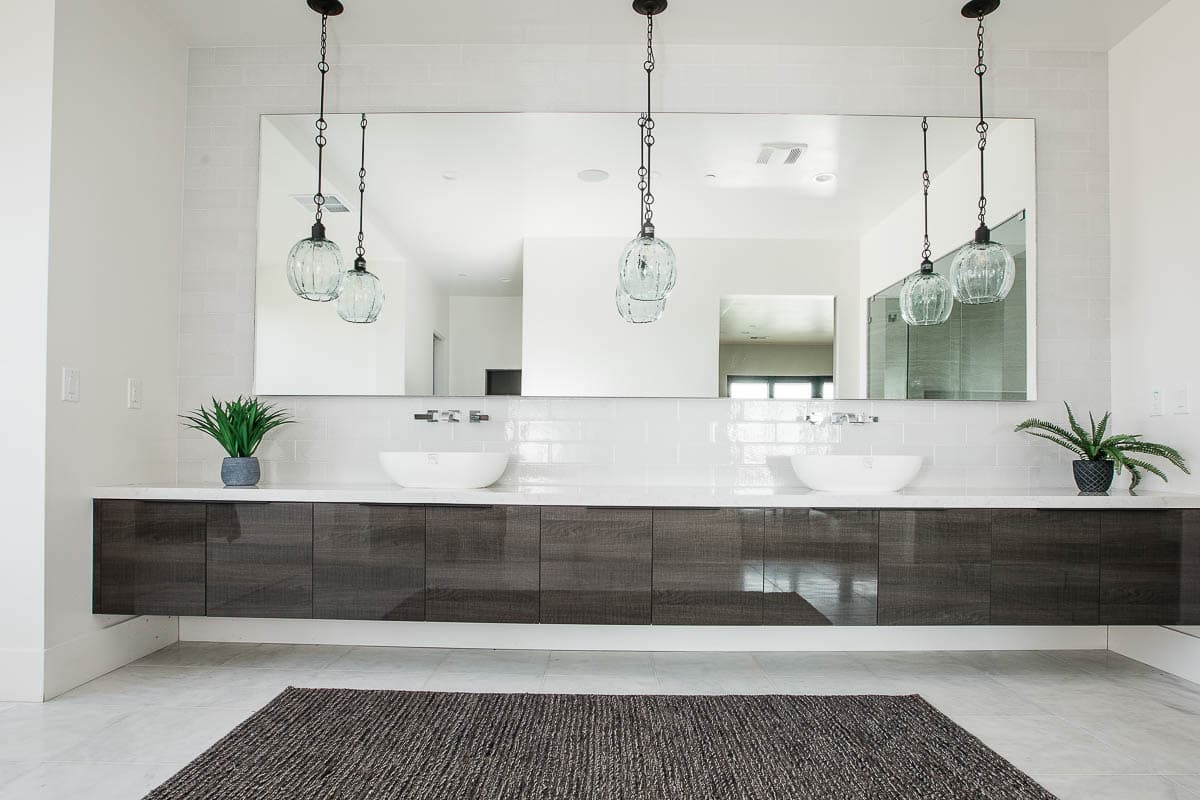
Slab — the modern plane
A slab door is a single flat surface with no frame, the language of contemporary and European-style cabinetry. Done well it depends on perfect flatness, tight reveals, and often continuous grain running across a bank of drawers — details that reward custom building.
Glass and mullion doors
Glass doors — plain, seeded, or divided by wood mullions — turn upper cabinets into display space and relieve a long run of solid doors. They are usually placed sparingly: flanking a hood, in a hutch, or over a bar.
Inset vs overlay: how the door meets the frame
Beyond the door face itself, the fit matters. Overlay doors sit on top of the cabinet frame; full-overlay nearly covers it, the standard contemporary look. Inset doors sit flush inside the frame opening like fine furniture — the most exacting fit to build, and a hallmark of high-end traditional work.