Cabinetry guide
Custom vs. Stock Cabinets: What You’re Actually Choosing Between
Every kitchen conversation eventually hits this question. The honest answer is that stock, semi-custom, and custom are different products that happen to share a name — and the right one depends on the room and what you want from it.
What stock and semi-custom mean
Stock cabinets are factory boxes in fixed sizes — typically 3-inch width increments — with a set menu of doors and finishes. Semi-custom starts from the same platform but opens up more sizes, options, and modifications. Both arrive as products chosen from a catalog; gaps between the fixed sizes are bridged with filler strips.
What custom means
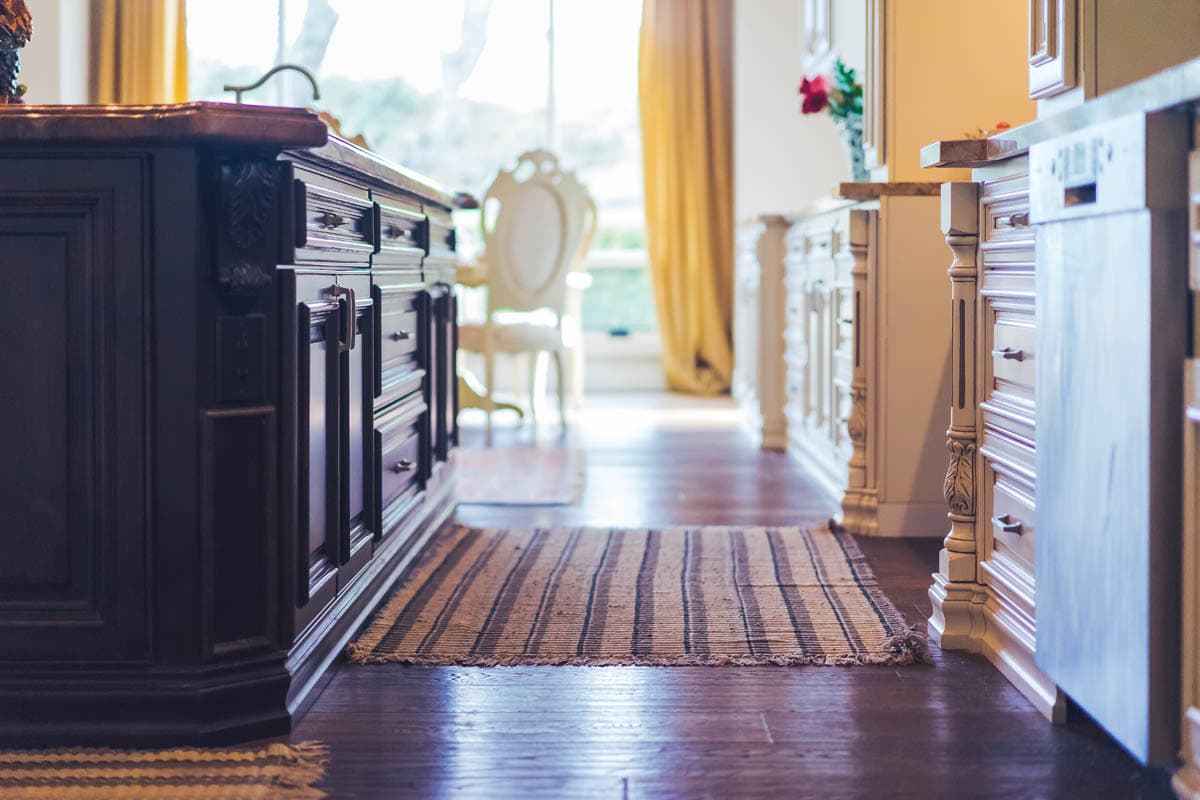
Custom cabinetry is built to the room: any width to the fraction of an inch, any height to the ceiling, storage designed around what you actually own, and door style, wood, and finish chosen freely rather than from a menu. Nothing is filler — the cabinetry meets walls, windows, and ceilings on purpose.
Where the difference shows
Fit: custom work absorbs out-of-square walls and odd dimensions that force compromises in fixed-size systems. Proportion: rails, stiles, and panels get sized to the room rather than to a factory standard. Detail: coffered ceilings, stacked crown, furniture feet, arched openings, and integrated paneling are custom territory by definition. Longevity: a custom piece can be built and finished to furniture standards because no production line constrains it.
When custom is genuinely worth it
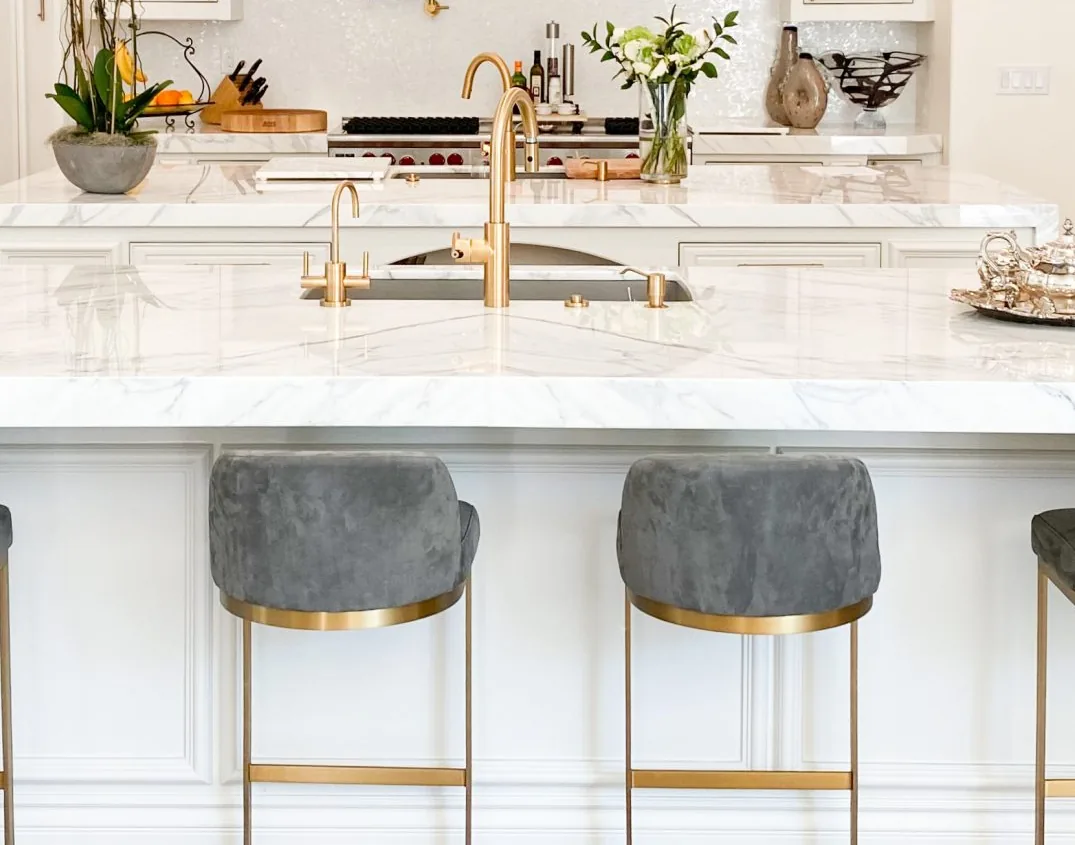
And when it isn’t: a standard-dimension room, a short ownership horizon, and a catalog look you already like are honest reasons stock or semi-custom serves well.
- The room is irregular — old walls, tall ceilings, or dimensions that fixed sizes fight.
- You want a specific door, wood, or finish combination catalogs don’t offer.
- The design includes built-ins, bars, ceiling work, or paneling that must match the cabinetry.
- You intend to keep the kitchen long enough to care how it wears and ages.