Cabinetry guide
Caring for Finished Wood Cabinetry
Well-built cabinetry doesn’t ask for much — but the few things it asks for matter. Most finish damage we see isn’t age; it’s moisture, heat, and harsh cleaners doing quiet work over years. Here is the short honest version of cabinet care.
Everyday cleaning
A soft cloth barely dampened with water — or water with a drop of mild dish soap — handles nearly everything. Wipe along the grain on stained work, dry with a second cloth, and you are done. The drying matters: standing water is the enemy of every wood finish, especially at door bottoms and around the sink.
What to keep away from a finish
- Ammonia, bleach, and abrasive powders or pads — they dull and eventually cut through finish.
- Wax and silicone polish sprays — they build a film that smears and complicates any future touch-up or refinish.
- Steam and heat — self-opening dishwashers, kettles parked under uppers, and ovens venting onto a face frame slowly cook the nearby finish.
- Prolonged direct sun without window treatment — all woods move in color; cherry especially deepens, and painted finishes can yellow.

Small habits that add years
Wipe spills when they happen instead of at cleanup time. Use the range hood — airborne grease is the film that makes kitchen cabinets feel sticky years in. Check that door bumpers stay in place so wood never slaps wood. And tighten a loosening hinge screw when you notice it, not after the door sags.
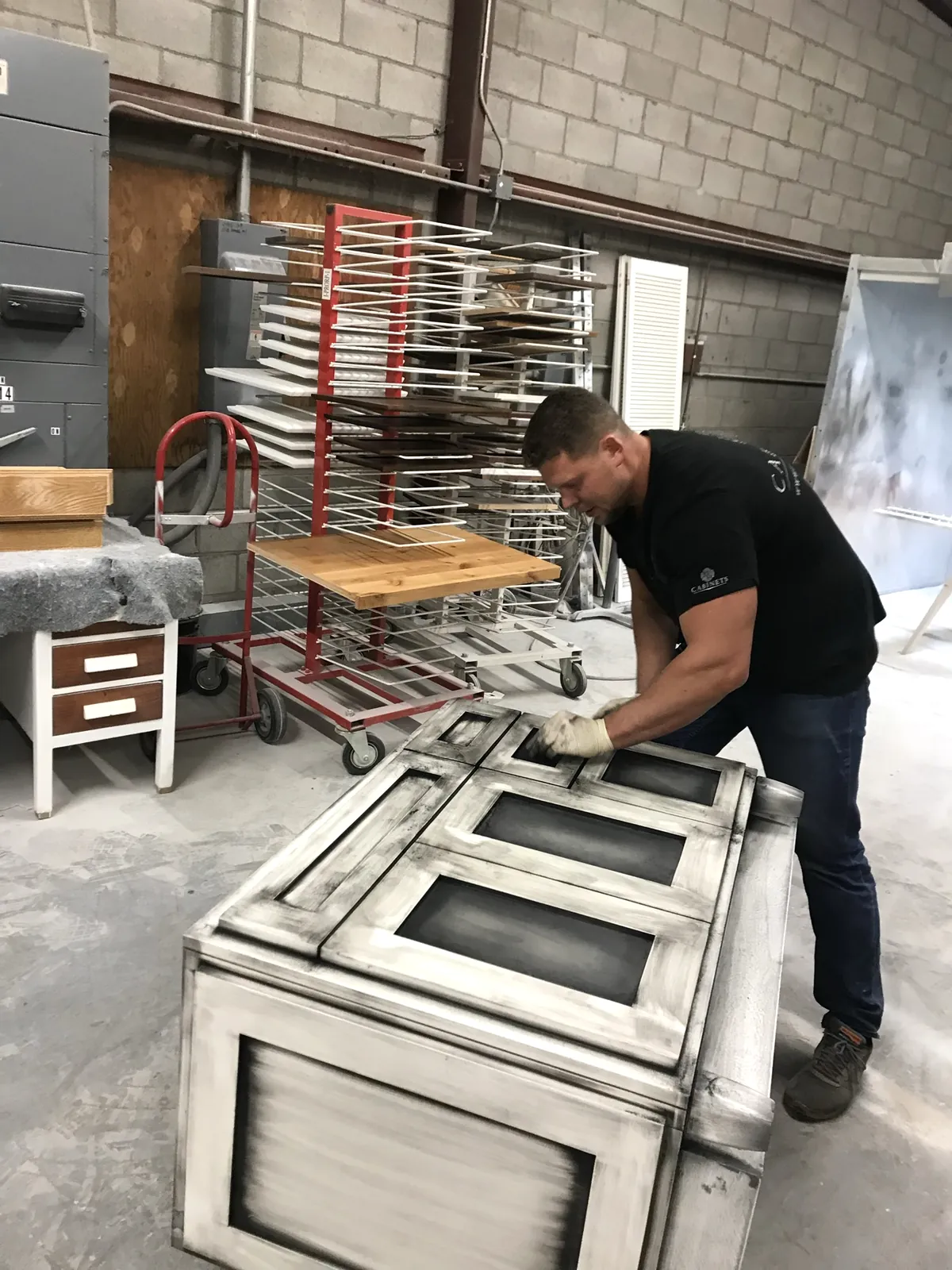
Glazed and distressed finishes
Hand-glazed finishes clean the same gentle way — the glaze lives under the topcoat — but deserve extra caution with anything abrasive, because the character lives in surface depth that scrubbing flattens.