Cabinetry guide
Choosing a Wood Species for Custom Cabinets
The wood you choose sets the character of a cabinet more than any other single decision: it determines the grain you see, how the finish takes, and how the piece ages in your home. This guide covers the species most often used in custom cabinetry and what each one is like to live with.
There is no single best wood — there is the right wood for a given room, finish, and budget. Species selection is one of the first things settled during design selection, with samples in hand.
Maple — the workhorse for painted and light cabinetry
Hard maple is tight-grained, smooth, and consistent, which is why it is the default choice for painted cabinets: the surface sands glass-flat and shows brush-free finish rather than grain texture. Left clear-coated or lightly stained, maple reads pale and uniform. Its hardness resists denting in busy kitchens.
One trait to know: maple can blotch under dark stains, so dark looks on maple are usually achieved with toned finishes or glazes rather than heavy stain alone.
Oak — pronounced grain that reads traditional or modern
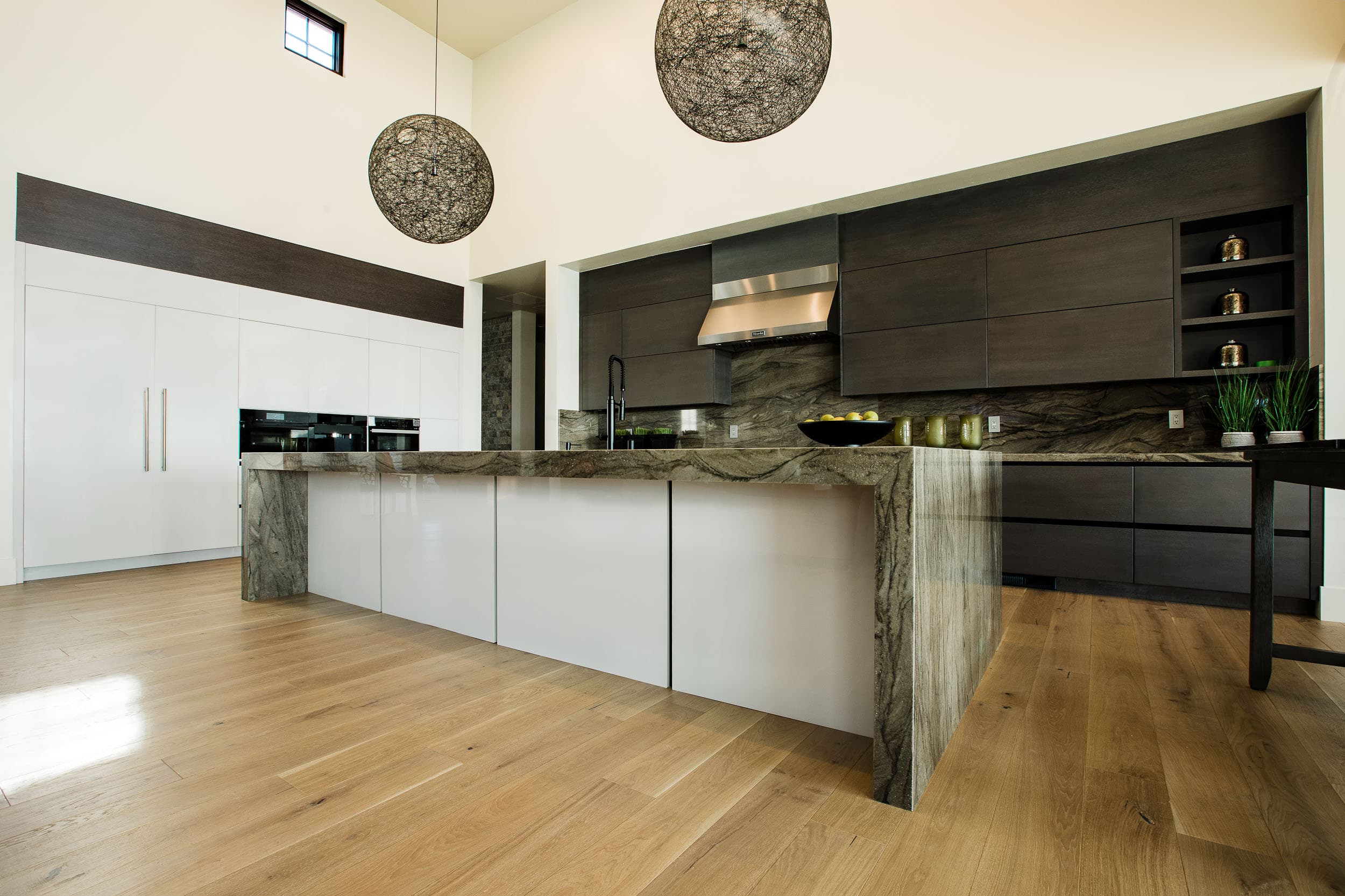
Oak has the most recognizable grain of the common cabinet woods — open, striped, and tactile. Red oak leans warm; white oak leans golden-brown and, when rift- or quarter-sawn, produces the straight, quiet grain lines popular in contemporary and craftsman work.
Oak takes stain evenly and deeply, which makes it forgiving for mid- and dark-toned cabinetry. The open grain telegraphs slightly through paint, so it is usually chosen when you want to see the wood.
Cherry — warmth that deepens with age
Cherry is a fine-grained hardwood with a warm reddish tone that darkens noticeably over its first years in daylight — a mellowing most owners consider the point of choosing it. It machines and carves cleanly, which suits detailed traditional work: raised panels, mouldings, and furniture-style pieces.
Walnut — the deep, chocolate-brown statement
Walnut is prized for rich brown heartwood and flowing grain, usually finished clear or nearly clear so the color does the talking. It is a common choice for islands, bars, floating shelves, and accent pieces where the wood itself is the feature.
Alder — the softer, budget-friendlier cherry look
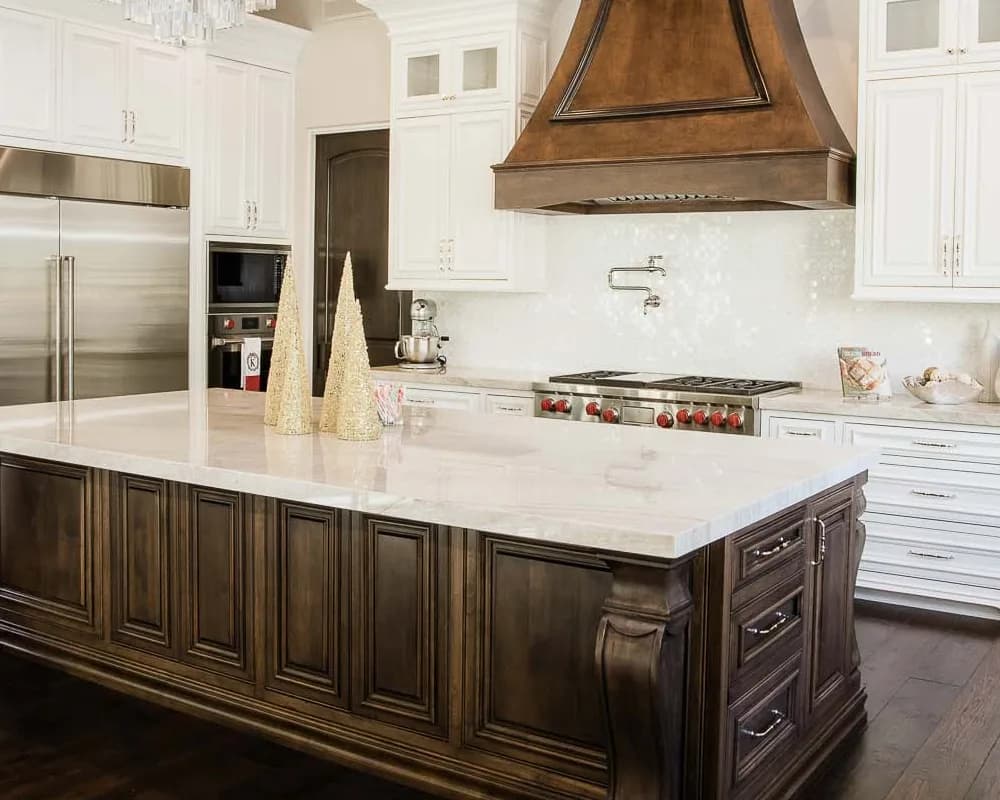
Alder resembles cherry in tone at lower cost, takes stain and glaze well, and dents more easily — a property actually used on purpose in distressed and rustic finishes. It shows up often in vintage-styled work with glazing.
Paint-grade builds
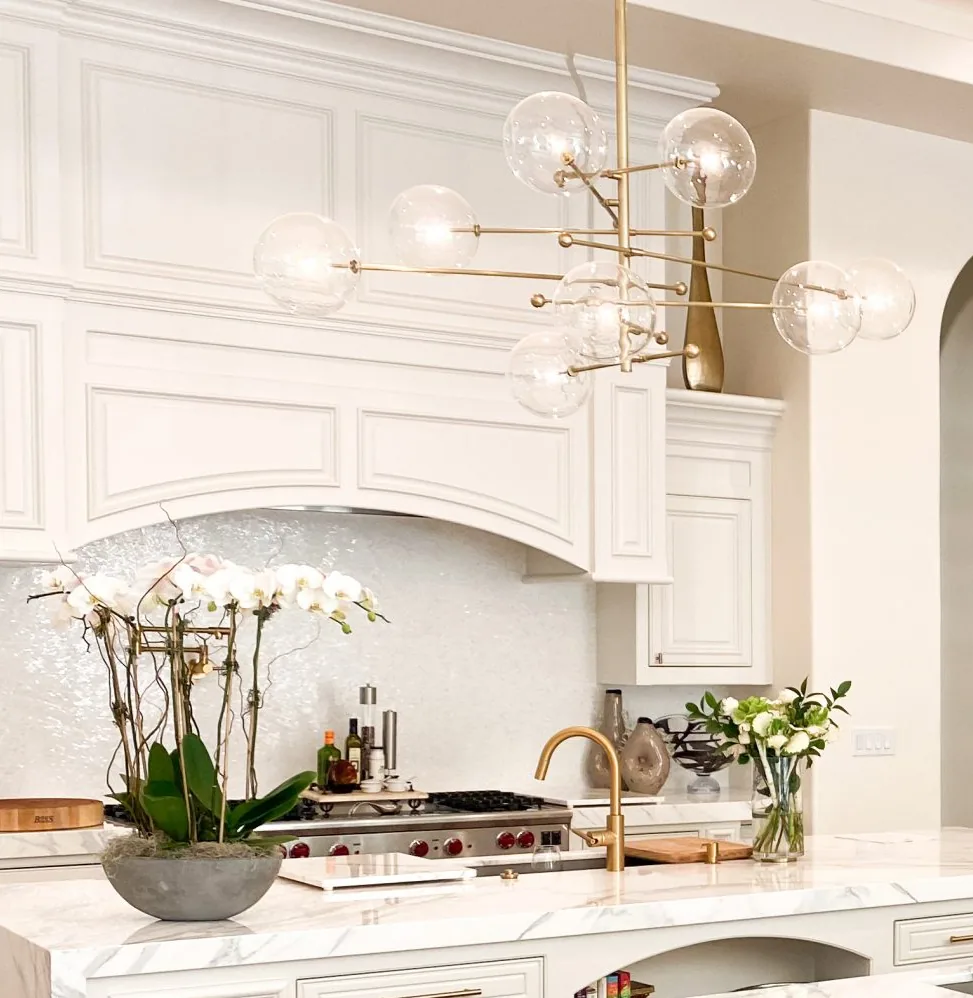
When the finish will be opaque paint, the priority shifts from grain beauty to stability and smoothness. Painted cabinetry is typically built from smooth hardwoods like maple or poplar for frames and doors, with premium plywood boxes — you pay for a flawless surface rather than for figure.
How to actually decide
Decide the finish family first — painted, stained, glazed, or clear — because it narrows the sensible species immediately. Then look at real samples in the room they will live in: wood changes character under your own light. This is exactly what the design-selection stage of a custom project is for; you look at options until the combination is right.