Vintage
35 project photographs — every one an AV’s Cabinets build.
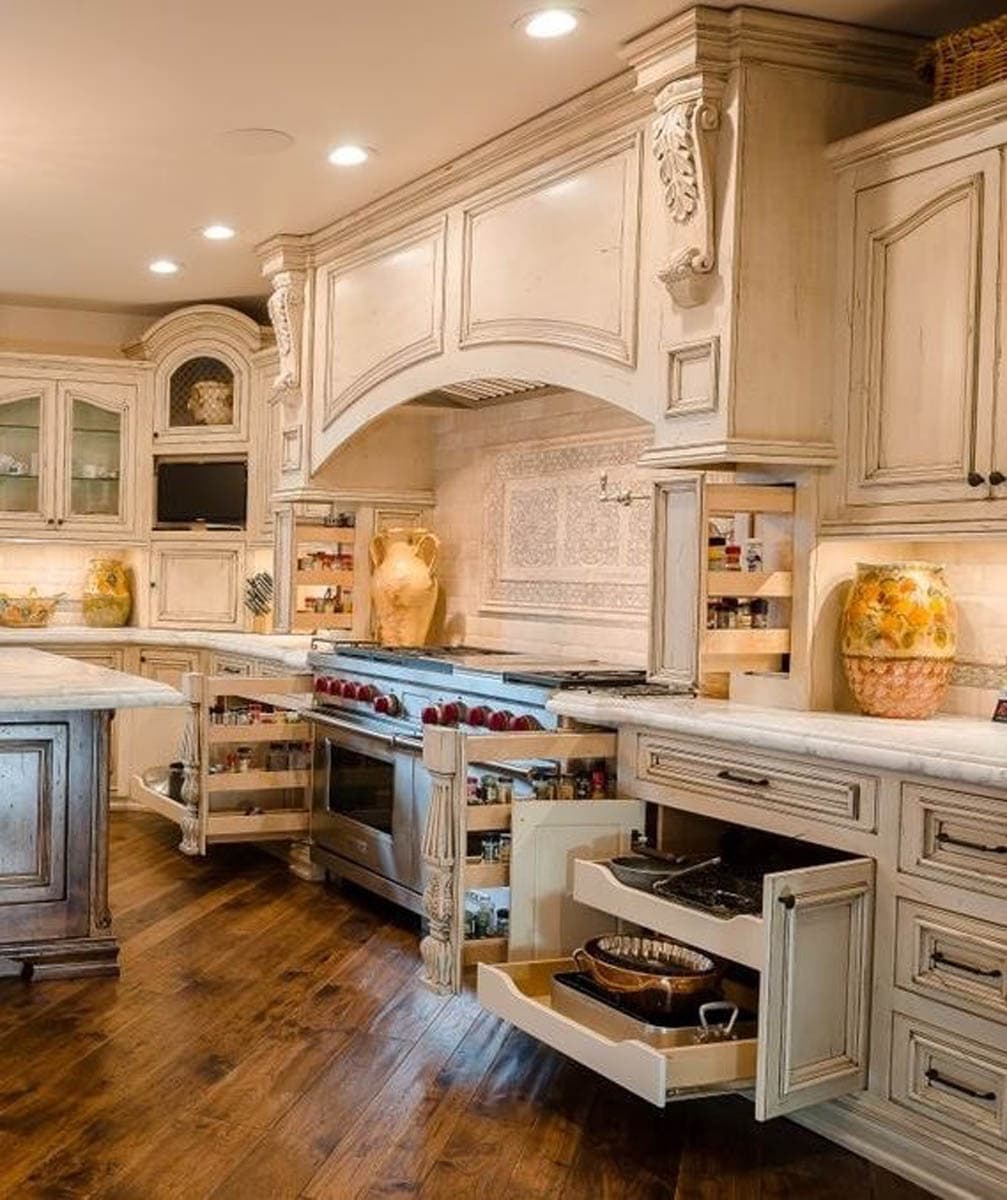
The traditional side of the portfolio: raised panels, glazed finishes, corbels, and stacked crown — the old-world detailing Andrey trained in, built for today’s homes.
Filed under: vintage Archives
The detail vocabulary of traditional cabinetry
Traditional work is built from a vocabulary: raised-panel doors with a profiled edge, face frames that can be set flush (inset) or overlaid, applied onlays and carved corbels, and crown that is stacked from several mouldings to gain depth rather than bought as one piece. Proportion is what separates convincing period work from a catalogue approximation — panel widths, stile and rail depths, and how far the crown projects all have to answer to the room’s ceiling height.
Finish carries as much of it as joinery. Glaze is applied and wiped back by hand so it settles into the profiles and reads as age rather than paint; distressing, when it is used at all, belongs where a real house would wear. Those are decisions made at design selection with samples in front of you, not chosen from a swatch card.
This is the register Andrey was trained in, and the one most often asked for in older homes where new cabinetry has to look like it was always there. The finishes guide covers paint, stain, and glaze in more depth.
Consultation & design selection
Start with a conversation about your project.
The time spent at the beginning of the process is critical — you look at as many options as you want until the design of your new or rebuilt space is right.