Cabinetry guide
Cabinet Finishes: Paint, Stain, and Glaze
Two cabinets built from identical doors can look like different furniture entirely once finished. Finish is where color, sheen, and age-character get decided — and it is the part of cabinetry people repaint rooms around.
Paint — color first, grain hidden
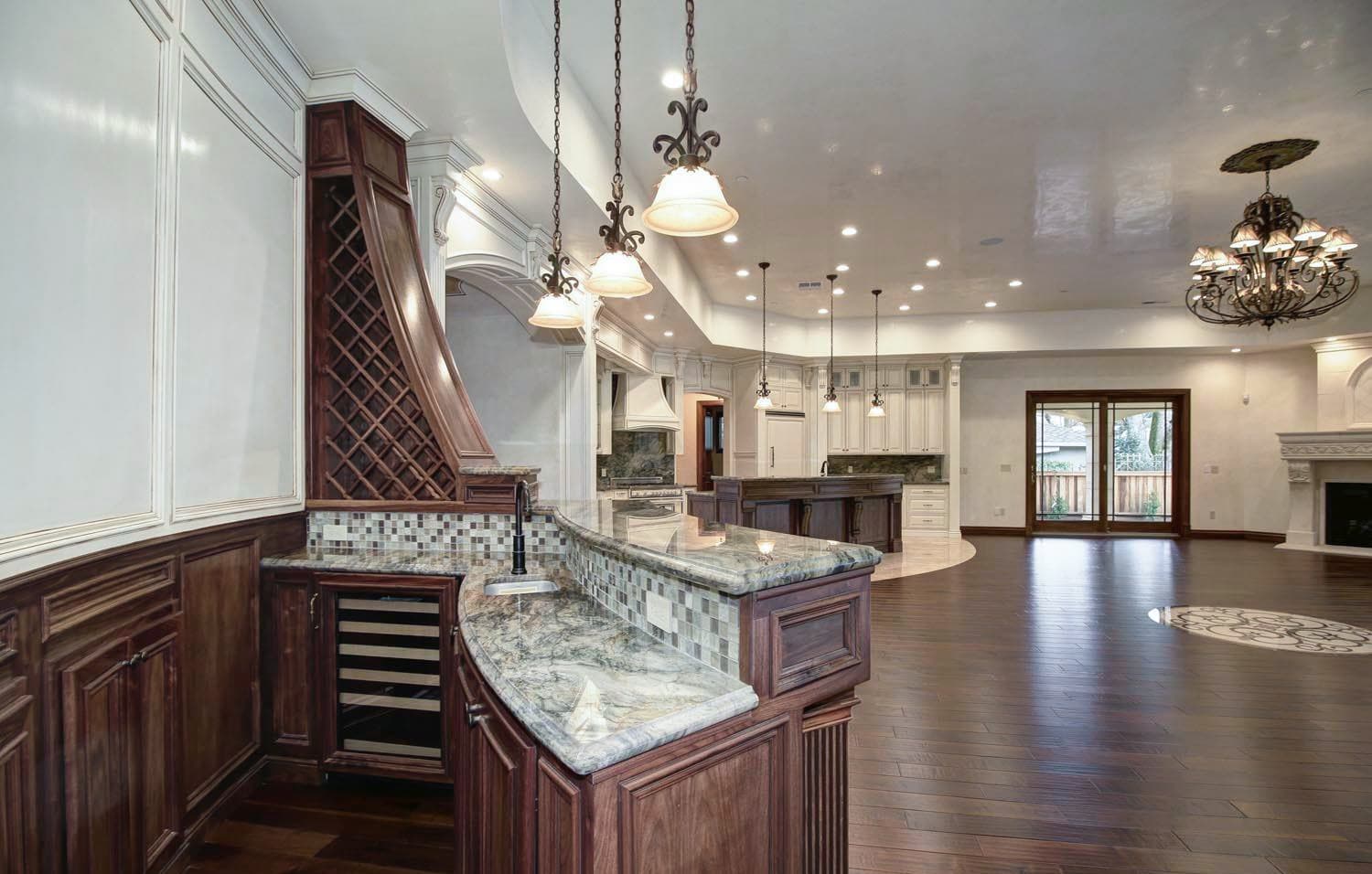
An opaque painted finish gives exact color control and a smooth, uniform surface. Whites and creams remain the backbone of classic kitchens; deeper painted tones are common on islands and bars as contrast pieces. Paint shows touch more than stain, which is why sheen choice and a hard topcoat matter in working kitchens.
Stain — the wood does the talking
Stain adds color while leaving grain visible, from nearly clear to deep espresso. The result depends as much on the species underneath as the stain itself — oak stripes, cherry glows, maple stays quiet. Stained work hides fingerprints and small wear better than paint.
Glaze — the aged, hand-finished layer
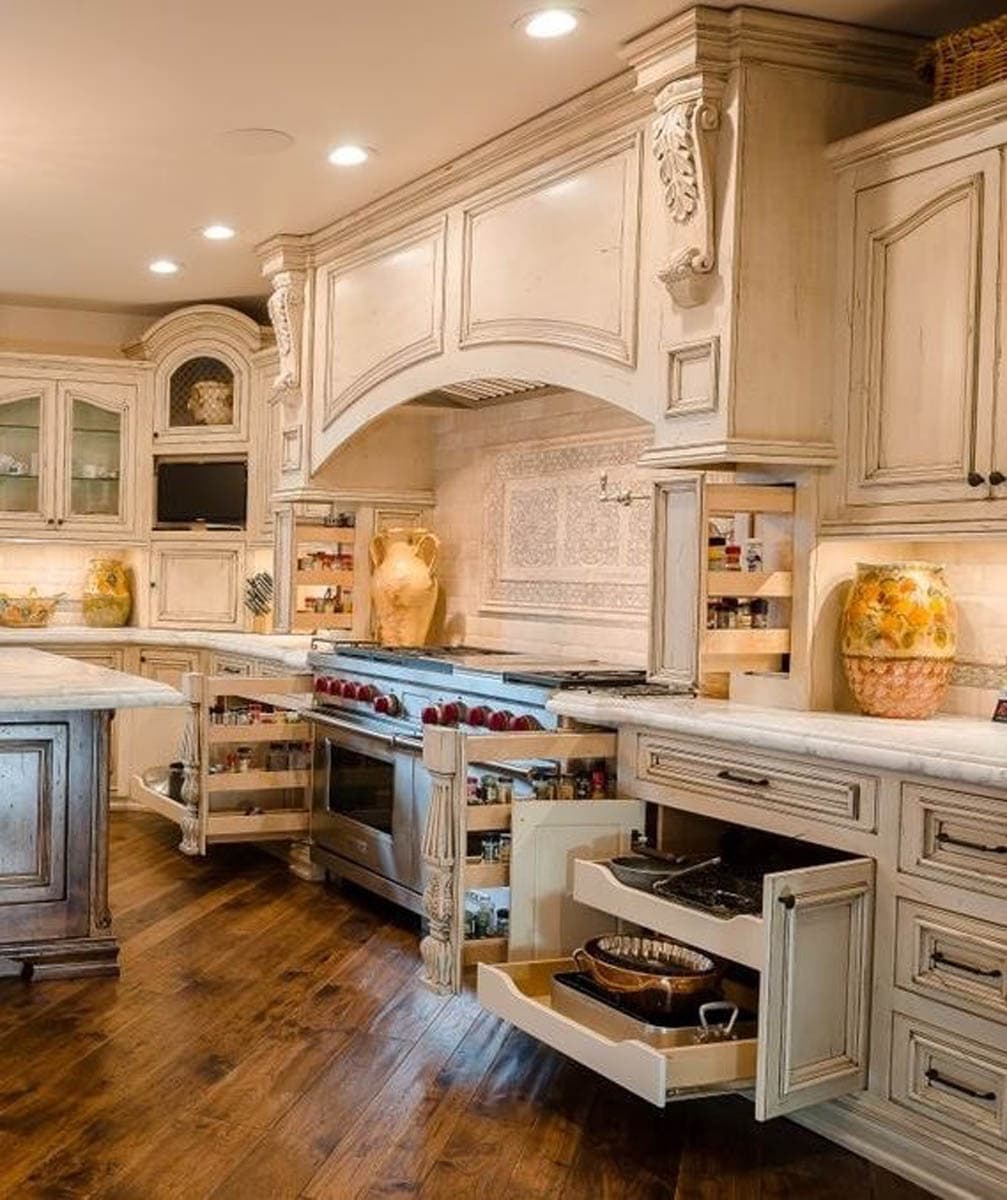
Glazing applies a translucent toner over a painted or stained base, then wipes it back so color remains in profiles, corners, and carved detail. It is what gives traditional cabinetry that hand-rubbed, antiqued depth — the effect you can see across the Vintage collection in our portfolio.
Distressing and specialty character
Distressed finishes add deliberate wear — softened edges, rasp marks, rub-through — so a new piece sits comfortably in an older or rustic home. It is finish as storytelling, and it only reads right when done by hand with restraint.
Choosing a finish that lasts in a real kitchen
Think about the room’s traffic and light: high-touch areas favor stain or mid-sheen paint; strong daylight will mellow woods like cherry over time; islands can safely carry a bolder finish than a full wall of perimeter cabinets. Finish samples on the actual door style — not flat chips — are the reliable way to judge.