Cabinetry guide
Coffered Ceilings: Anatomy of the Detail Work
A coffered ceiling turns the room’s fifth surface into architecture: a grid of beams framing recessed panels overhead. It is among the oldest ideas in interior building — and among the least forgiving to execute, because every joint hangs at eye-level geometry where nothing can be hidden.
Coffered ceilings and stacked mouldings are Andrey’s specialty — the difficult detail work the About page mentions is largely this.
The anatomy
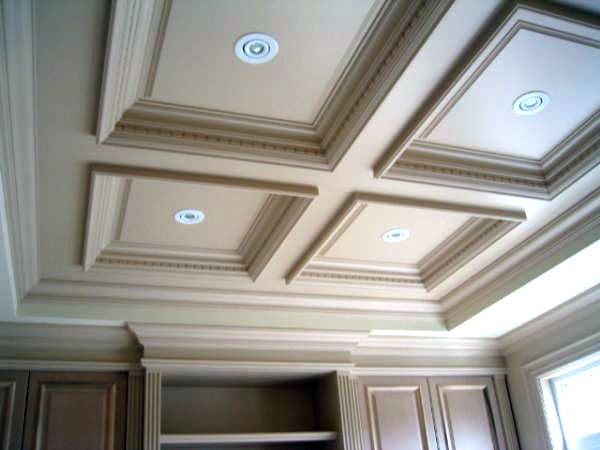
A coffer grid is built from beams (real or hollow box beams), the field panels between them, and the mouldings that resolve the joint where beam meets panel — typically crown or cove run inside every single coffer. A modest grid multiplies into dozens of inside corners, each mitered and coped by hand.
Painted vs stained
Painted coffers — usually ceiling-white over paint-grade material — brighten a room and read classically architectural; the grid shows as shadow and profile rather than wood color. Stained coffers in maple, alder, or walnut tones make the ceiling a warm feature and pair naturally with libraries, offices, and great rooms. Both approaches appear in our ceilings portfolio.

Why layout is the real skill
Rooms are rarely square and almost never divide into even coffers by luck. Good coffered work starts with a layout that centers the grid on the room’s sightlines, sizes border coffers evenly, and lands beams where lighting, vents, and speakers need them. That planning happens before a single board is cut.
What makes installation difficult
Everything overhead is measured twice against a surface that is never flat. Box beams must run straight over ceilings that sag and crown; mouldings meet at compound angles; and stacked profiles amplify any error in the previous layer. It is precisely the kind of work where the person who built the parts should be the person installing them.